

Honda
N-BOX
201,354Japan sales · 2025
Explore the N-BOX →The VIR.JE kei guide · 軽自動車
From post-war ingenuity to gullwing sports cars and vans that work harder than their size suggests. Meet Japan’s most inventive small vehicles — and discover their island appeal.
Get to know kei ↓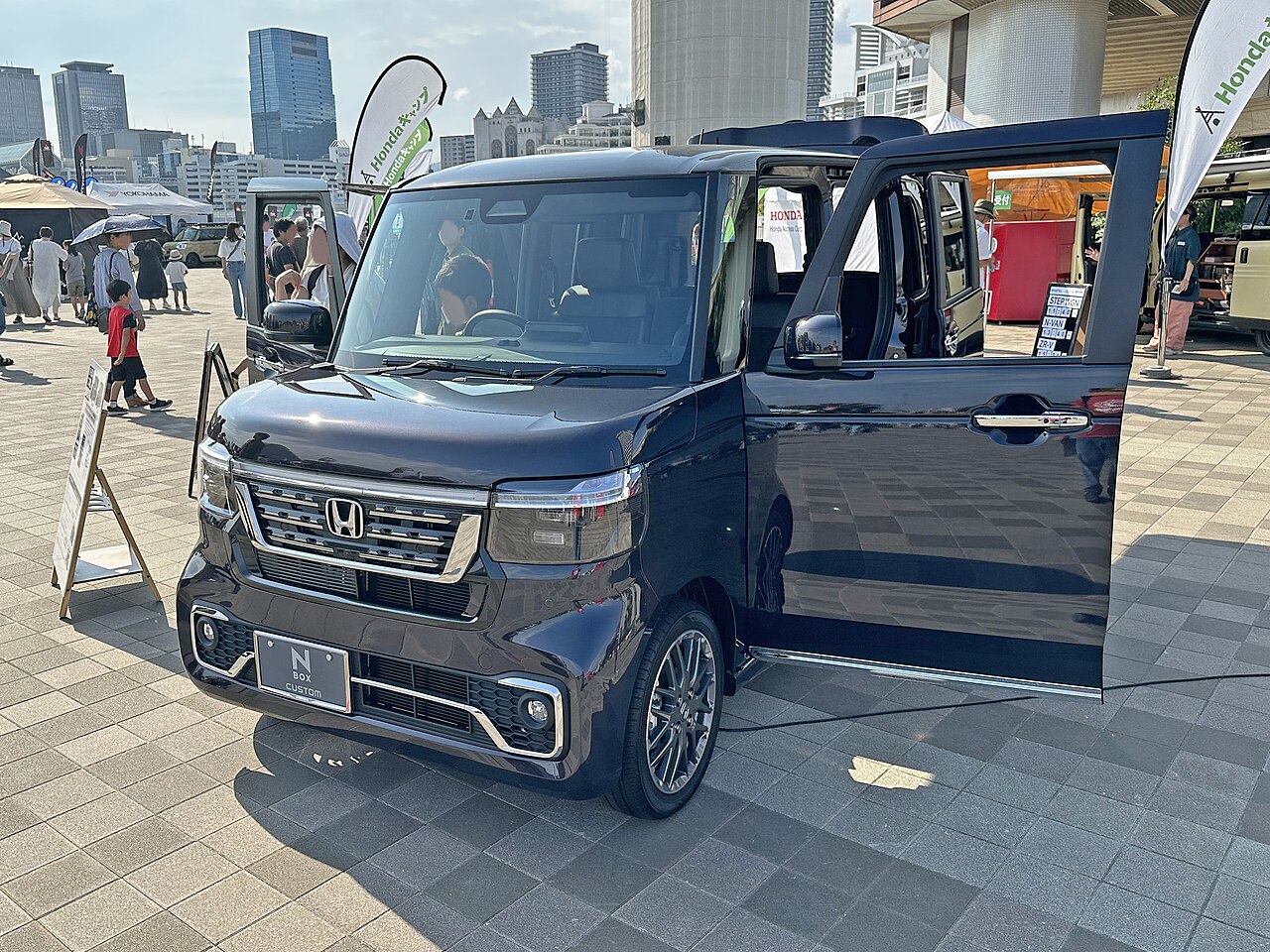
01 / A class, not a model
“Kei” covers passenger cars, vans and trucks. Modern Japanese four-wheel kei vehicles fit within the same compact size limits, so designers find room in the layout, the roof and the details.
Illustrative body outline · not a vehicle-specific drawing
These are class limits, not the exact dimensions of every kei. Mirrors, accessories, load space and turning circle need checking on the individual vehicle. Electric kei vehicles have no engine displacement. Older cars can belong to earlier, smaller standards. Japanese class standards ↗
02 / The short history
A category born from practical needs became a canvas for clever engineering, expressive design and some delightfully unexpected cars.
Japan introduces the kei vehicle category. Its name, keijidōsha, means “light automobile”: a class defined by size and engine capacity, rather than one particular body style.
Kei Inspection Association ↗Suzuki launches the 360cc Suzulight in 1955. Subaru follows with the Subaru 360 in 1958. Compact cars begin bringing four-wheel transport within reach of more households.
Suzuki archive ↗The limits grow to 550cc, 3.20m long and 1.40m wide. Vans, pickups and passenger cars gain useful space while keeping their compact character.
Japanese transport ministry ↗Engine capacity rises to 660cc and maximum length to 3.30m. The early 1990s also bring wonderfully inventive sports cars, including the Beat, Cappuccino and AZ-1.
Class standards history ↗The Suzuki Wagon R makes the tall, square passenger-car layout a hit. Upright seating and a high roof become a recipe for more cabin space without a bigger footprint.
Suzuki Wagon R history ↗October’s revision brings the familiar 3.40m length and 1.48m width limits. Suzuki’s archive links the change to improved collision safety; the 660cc engine limit remains.
Suzuki technical history ↗Sliding doors, folding cabins and driver assistance sit alongside turbo petrol engines and electric models. Honda’s N-VAN e: arrived in Japan in 2024, taking the working kei van into the EV era.
Honda N-VAN e: launch ↗Early Subaru history: Subaru 360 heritage ↗
03 / What Japan buys
The biggest sellers are practical passenger cars with tall cabins. These are Japan’s top three kei passenger-car nameplates by full-year 2025 sales.
Japan sales · 2025
Explore the N-BOX →Japan sales · 2025
Passenger kei nameplateJapan sales · 2025
Passenger kei nameplateSource: Japan Light Motor Vehicle and Motorcycle Association, January–December 2025 cumulative figures. Nameplates can combine versions; these figures measure Japanese new-car sales, not rarity, Jersey demand or current stock. Official sales table ↗
04 / Rare finds & enthusiast favourites
Three defining early-1990s kei sports cars: A, B and C. Our enthusiast selection, rather than a ranking of today’s most valuable or most sought-after cars.
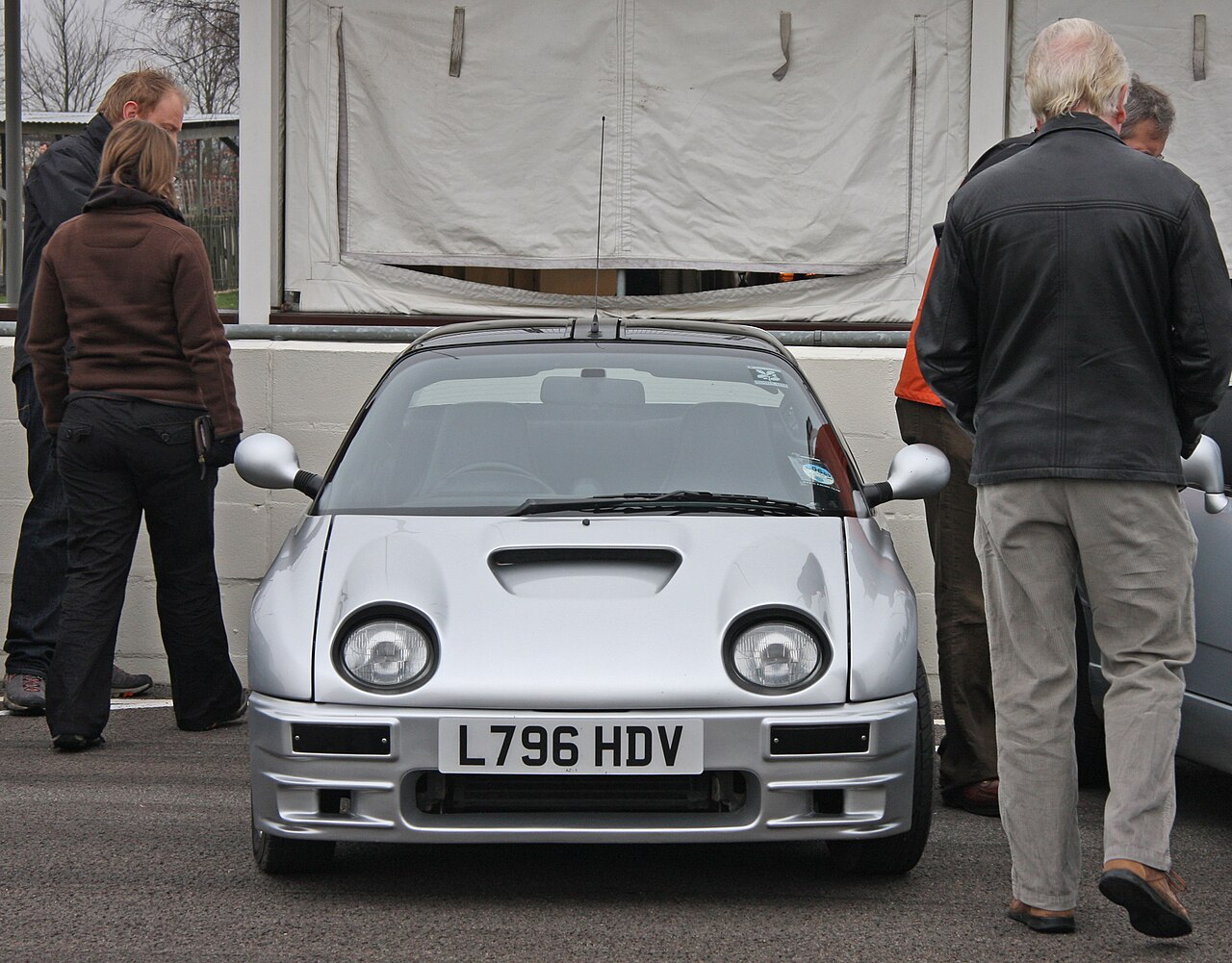 A
1992 debut · the rare find
Gullwing doors, a mid-mounted turbo engine and a tiny two-seat body. Mazda’s miniature exotic is the unusual one in this trio. AutoZine reports around 4,400 AZ-1s built; surviving condition and originality matter more than the badge alone.
Mazda AZ-1 history ↗Reported AZ-1 production ↗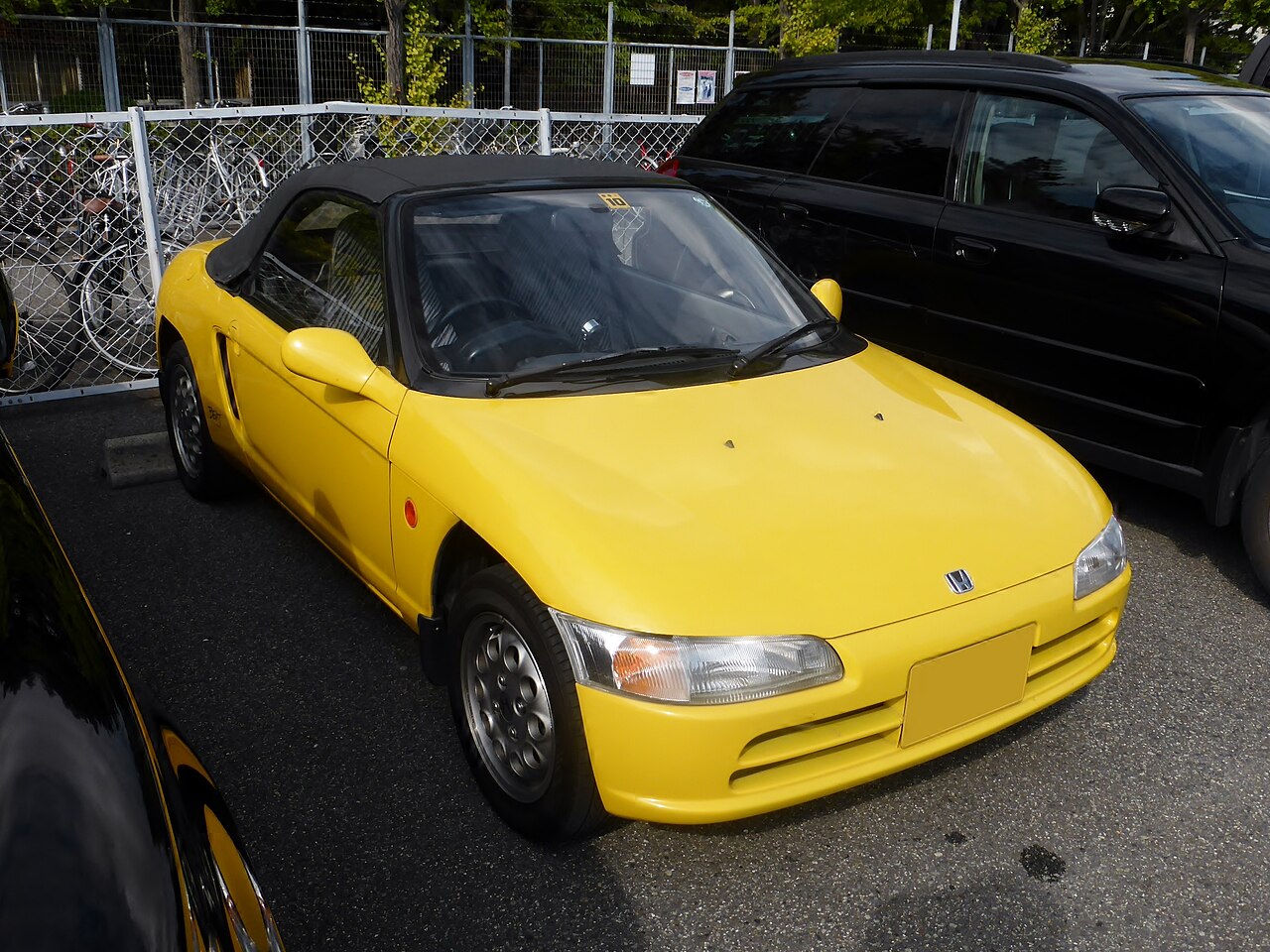 B
1991 debut · the open-air favourite
A mid-engined roadster with a naturally aspirated three-cylinder engine, a manual gearbox and a fabric roof. Its appeal is the combination of lightness, responsive handling and the sense of occasion in a very small car.
Honda Beat archive ↗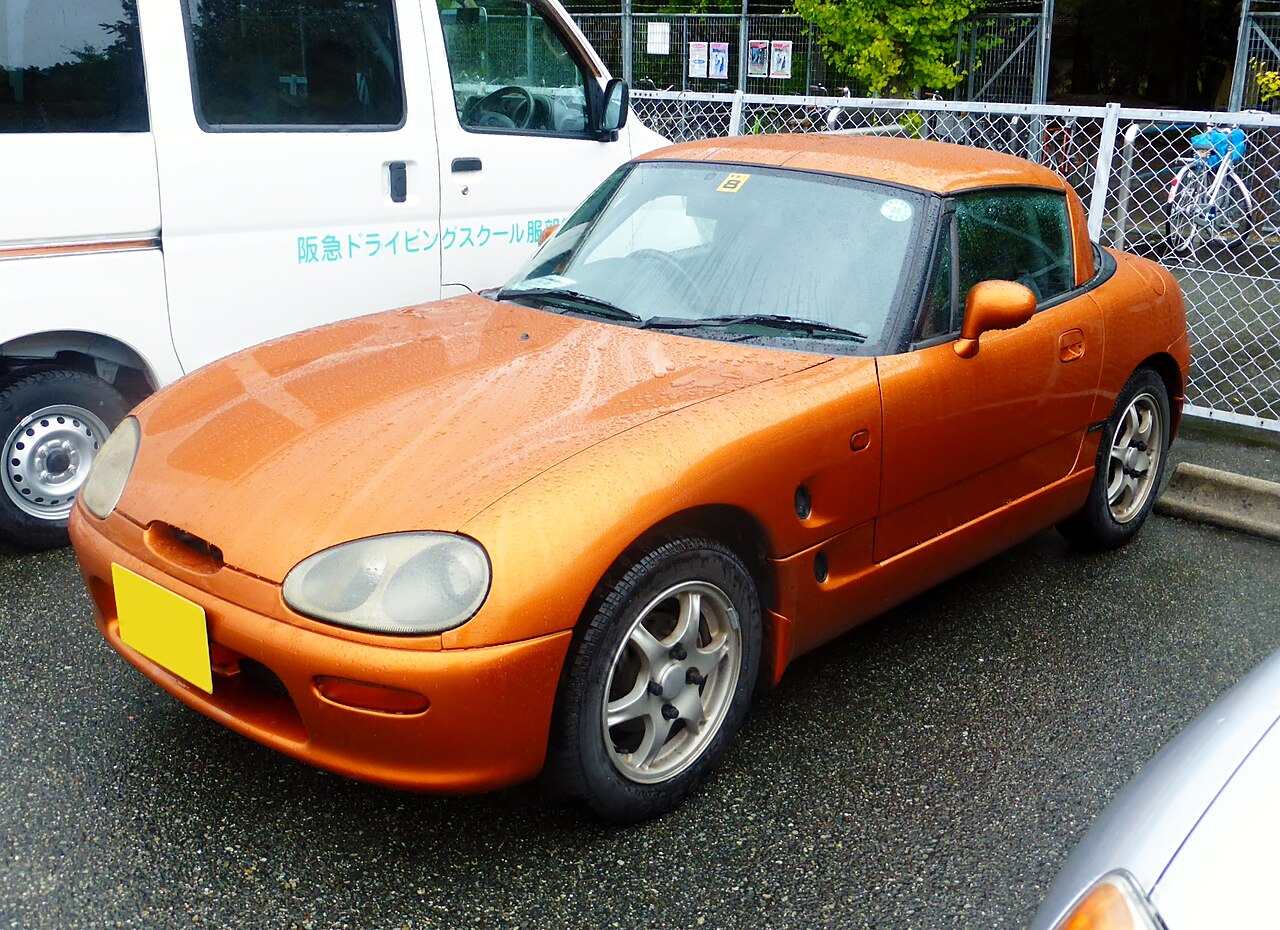 C
1991 debut · four roofs in one
A front-engined, rear-wheel-drive turbo roadster with removable roof panels. Hardtop, T-bar, targa and fully open configurations give it an ingenious party trick. Suzuki lists the original example at just 700kg.
Suzuki Cappuccino archive ↗Classic-car interest depends on condition, originality and specification. A rare model is not automatically a better buy. These are reference examples, not advertised stock. Photo credits ↗
Discuss a classic kei →05 / Clever details & new directions
The interesting part is what designers do inside the limits. Features vary by model, year and grade — we match the actual vehicle to your brief.
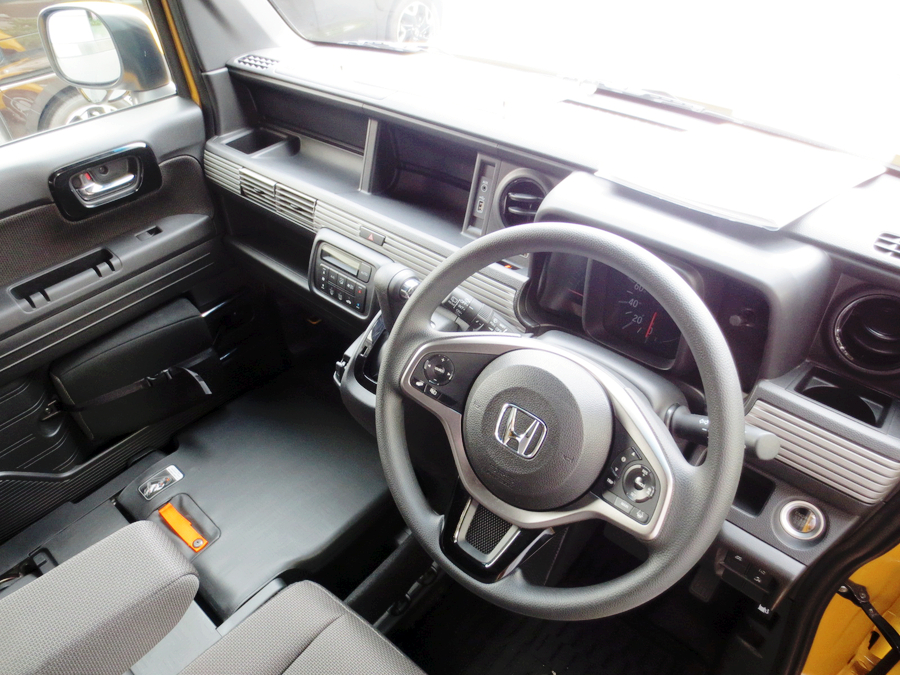
The N-VAN’s passenger-side doors open without a fixed centre pillar between them. Together with its low floor and folding seats, that makes an unusually flexible loading arrangement.
Honda explains the layout ↗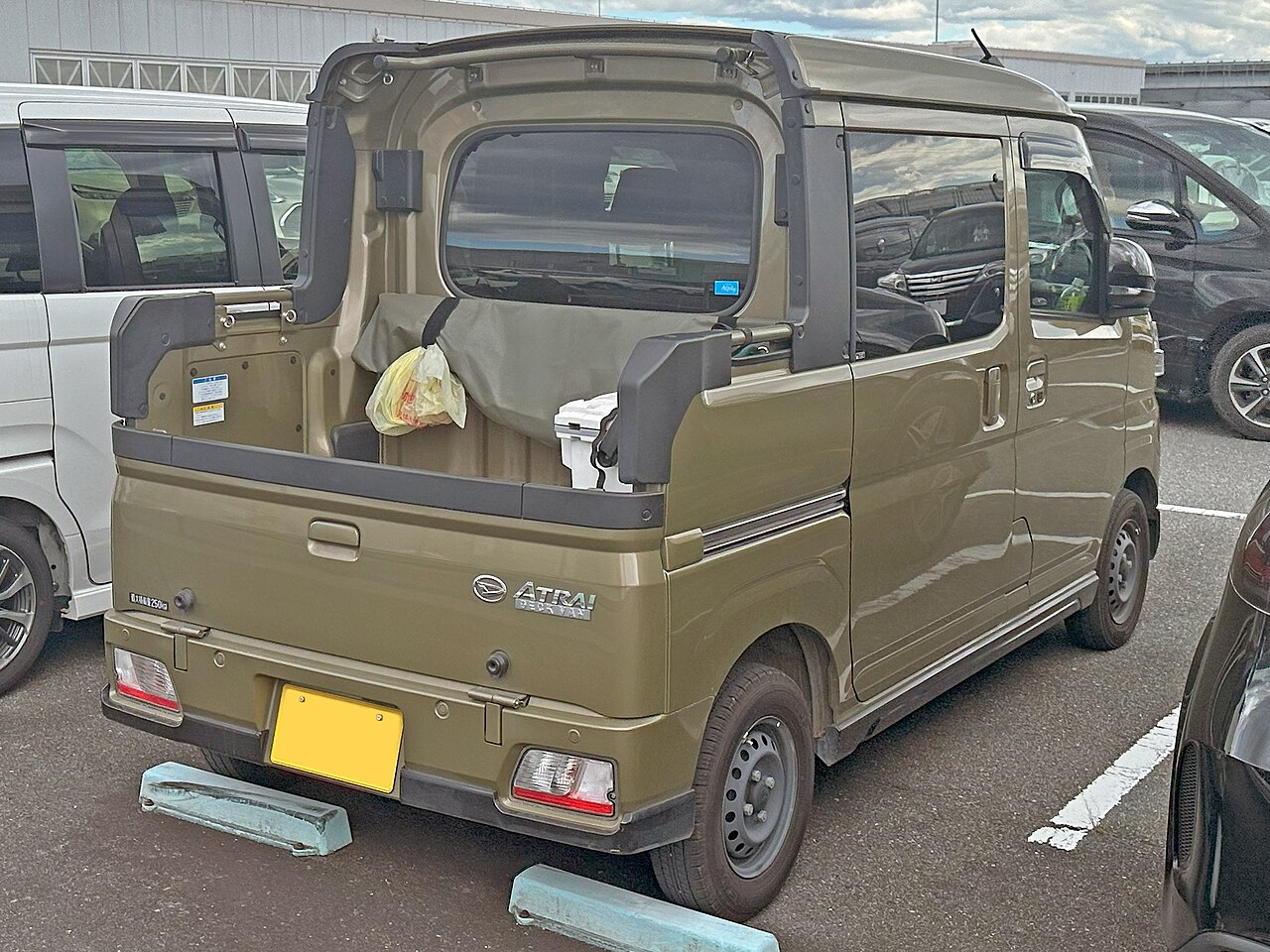
The Atrai Deck Van combines rear seats and sliding doors with a small open load deck. It is a very different proposition from a van or full pickup bed — ideal to explore when your brief mixes people and outdoor equipment.
Daihatsu Deck Van ↗Explore the layout →Carry pickups have a bed accessible from the sides and rear. Extended-cab Super Carry models trade some bed space for extra cabin room. The useful choice depends on what you carry.
Suzuki Carry range ↗Recent passenger kei cars can include collision-mitigation braking and other driver assistance. Honda made Honda SENSING standard across the third-generation N-BOX range. Older imports have different equipment.
Honda N-BOX technology ↗Honda launched the N-VAN e: in Japan in 2024, quoting 245km in the Japanese WLTC test. Real range depends on load, weather and use. For a Jersey brief, we check charging compatibility, support and vehicle suitability before proposing an import.
Honda N-VAN e: specifications ↗06 / Japan-sized. Jersey-ready.
We think a small footprint and a useful body make a compelling combination for Jersey. The benefit is how well a vehicle fits your day.
Jersey’s all-island maximum speed limit. Lower local limits and vehicle-specific limits also apply. Government of Jersey ↗
A narrow body is useful on tight approaches, older lanes and small yards. Mirrors still count: we check the full width against the places you actually drive.
Short bodies help in constrained parking and delivery spaces. Sliding doors can make access easier when there is little room beside the vehicle.
For local rounds, the brief is often about easy access, load space and manoeuvrability. A turbo, automatic or 4WD version may suit particular loads, hills or surfaces; it is a choice to make for the job.
Choose an enclosed van for tools, a drop-side truck for materials or a passenger kei for everyday trips. Cabin comfort, payload and your largest item matter as much as the overall size.
We discuss passengers, routes, loads, storage and service needs, then verify the candidate’s condition, specification and Jersey registration requirements. Japanese kei classification does not itself establish Jersey approval or a local tax benefit.
Find your vehicle →From the guide to your driveway
Explore the working collection, or tell us about the kei you have in mind.
Guide researched October 2026. Historical examples and features describe the cited models and years. Photography is representative, with licences and credits.